You may know how it feels to hope that a new president or a new boss will put things right, and then to watch them let you down in the same way as the one before. When that happens again and again, you can give up hope that any leader will make your life better. But what if there is one man who can heal every kind of pain that people carry?
To find out who that man is, we will go back to the beginning of the world and follow what goes wrong each time that people rule.
A promise in the garden
In one account of how the world was created, God gives the first people a job:
Genesis 1:26 (ESV)
'Then God said, "Let us make man in our image, after our likeness. And let them have dominion over the fish of the sea and over the birds of the heavens and over the livestock and over all the earth and over every creeping thing that creeps on the earth."'
In other words, God puts people in charge of his world and asks them to look after its creatures for him.
Yet when a serpent, one of those creatures, tells the woman that eating from the one tree that God forbids will make her like God, she eats the fruit and gives some to her husband. Many people call that moment the Fall, since it is when the first people, whom God puts in charge of the animals, let one of those animals lead them away from him.
Before God sends the first people out of the garden, he makes the serpent a promise about the woman's descendants:
Genesis 3:15 (ESV)
'I will put enmity between you and the woman, and between your offspring and her offspring; he shall bruise your head, and you shall bruise his heel.'
In plainer words, God promises that one of the woman's descendants will crush the serpent's head, even though the serpent will wound his heel. From here on, we will look out for that descendant, the person who can undo what the serpent does.
When anger waits at the door
Outside the garden, the first people have two sons called Cain and Abel. When God accepts Abel's offering and rejects Cain's, Cain grows so angry that God warns him, 'sin is crouching at the door. Its desire is for you, and you must rule over it.'
God pictures sin, the wrong that people do against him, as a wild animal crouching by the door, which Cain must rule in the way that the first people should rule over the animals in the garden. However, Cain lets that animal win when he kills his brother in the field, in the same way that his parents let the serpent win.
A city that wants a great name
After a great flood, the people of the earth settle on a plain and decide to build a city with a tower. They say to one another, 'Come, let us build ourselves a city and a tower with its top in the heavens, and let us make a name for ourselves, lest we be dispersed over the face of the whole earth.' God confuses their language and spreads them across the earth before they can finish. Their city is called Babel, which is the same word as Babylon in Hebrew.
Centuries later, the army of King Nebuchadnezzar of Babylon destroys Jerusalem and carries its people away as captives. Nebuchadnezzar wants the same great name as the builders of Babel. One day, as he walks on the roof of his palace, he asks, 'Is not this great Babylon, which I have built by my mighty power as a royal residence and for the glory of my majesty?'
In the scene below, you can switch between two places from which to watch those captives reach Babylon.
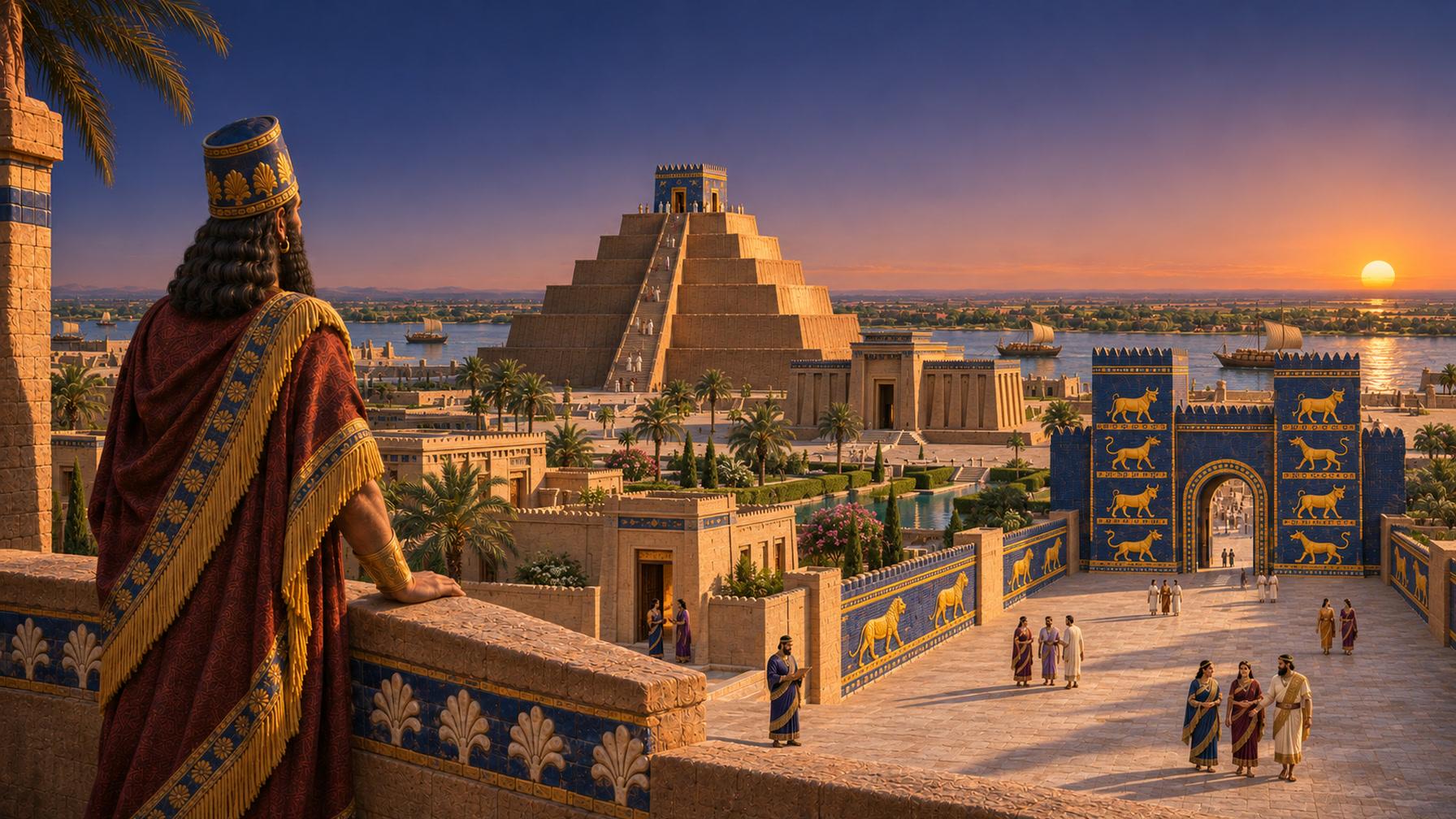
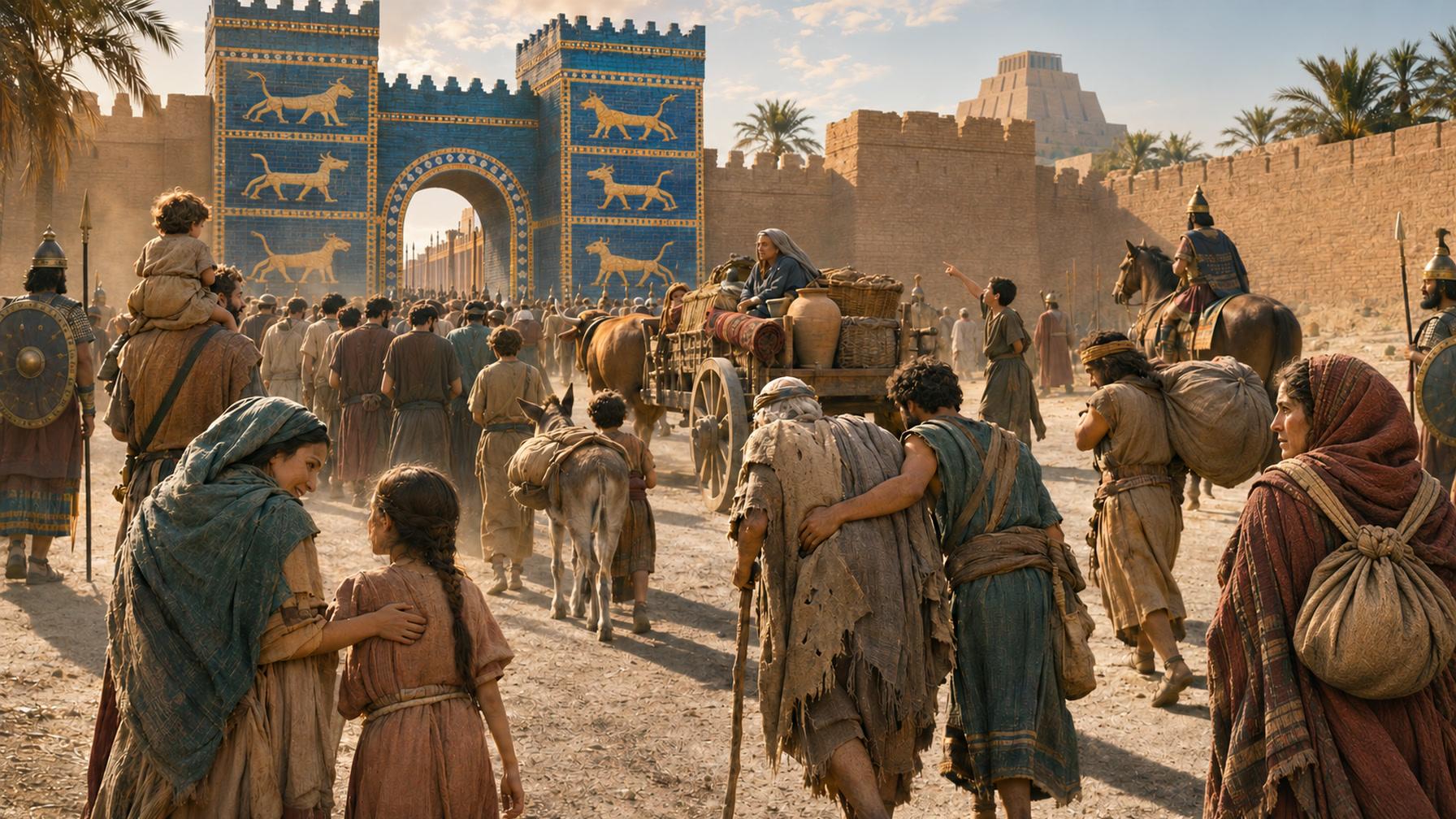
From the palace, the king sees proof of his greatness, while the captives on the road see the city where they lose their homes and their freedom. Nebuchadnezzar makes his name great by taking those captives, who need someone to set them free.
Beasts, and a man who comes with the clouds
Among the captives taken to Babylon is a young man called Daniel. Years later, in a dream, he sees four great beasts come up out of the sea. The first three look like a lion, a bear, and a leopard. The fourth, different from them all, devours its victims with great iron teeth and stamps what is left with its feet. Someone in the dream tells Daniel that the beasts are kings.
God makes people to look after his creatures, yet these kings act like wild animals and devour the people whom they rule. Then Daniel sees someone else come before God, whom he calls the Ancient of Days:
Daniel 7:13-14 (ESV)
'I saw in the night visions, and behold, with the clouds of heaven there came one like a son of man, and he came to the Ancient of Days and was presented before him. And to him was given dominion and glory and a kingdom, that all peoples, nations, and languages should serve him; his dominion is an everlasting dominion, which shall not pass away, and his kingdom one that shall not be destroyed.'
Daniel's phrase 'one like a son of man' describes someone who looks human, unlike the beasts before him. After a line of kings who act like beasts, God gives a human being the dominion that he first gives people in the garden, in a kingdom that will never be destroyed.
When Daniel wakes, he writes the dream down, but the man in his dream has yet to come.
A man who kneels
Centuries after Daniel, a man called Jesus comes from the town of Nazareth and calls himself the Son of Man, which is the title that he uses for himself more than any other. Over the course of his life, he does what each of the people before him fails to do.
In the wilderness, Jesus faces the same crouching sin as Cain, when the devil shows him all the kingdoms of the world and offers him every one of them if Jesus will bow down and worship him. Jesus answers:
Matthew 4:10 (ESV)
'Be gone, Satan! For it is written, "You shall worship the Lord your God and him only shall you serve."'
Cain gives in to sin over one rejected offering, whereas Jesus holds out when the whole world is on offer.
When two of his followers ask him for the places of honour in his kingdom, Jesus calls them all together and tells them that the rulers of the nations lord it over their people. Whoever wants to be great among them, he says, must serve the others, as he does himself:
Mark 10:45 (ESV)
'For even the Son of Man came not to be served but to serve, and to give his life as a ransom for many.'
In Jesus's day, a person could pay a ransom to buy a captive's freedom. Where Nebuchadnezzar takes captives to make his name great, Jesus gives his life to set captives free.
On the night before he dies, Jesus kneels and washes his followers' feet, which is a servant's job. Peter protests, but Jesus tells him that unless Jesus washes him, Peter has no share with him.
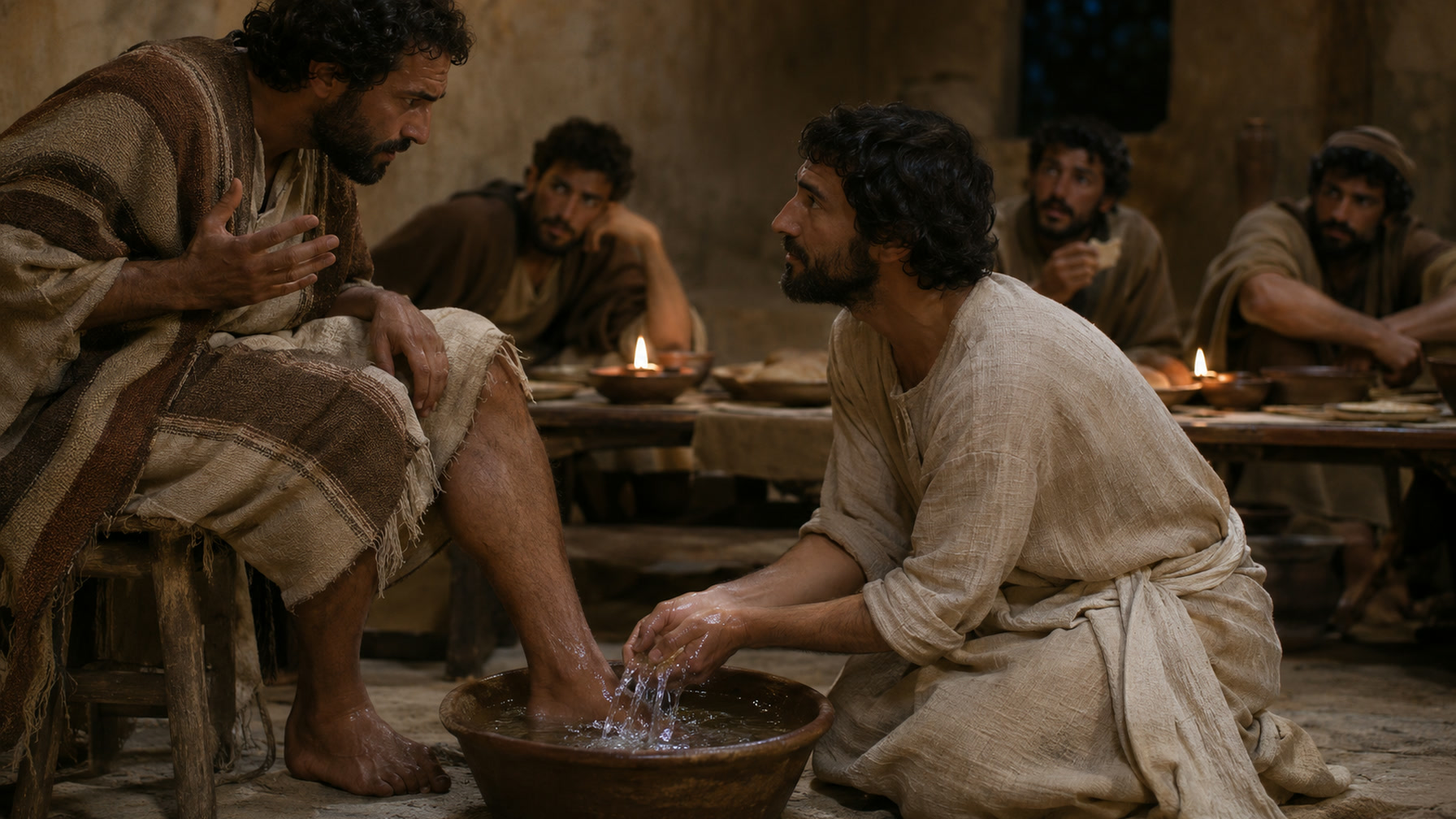
Later that night, at his trial, the high priest asks Jesus whether he is the Christ, the king whom God promises to send. Jesus answers in the words of Daniel's dream, saying, 'I am, and you will see the Son of Man seated at the right hand of Power, and coming with the clouds of heaven.' The council condemns him to death for that answer, since with it Jesus claims to be the man in Daniel's dream, seated beside God.
The next morning, the Roman governor, Pilate, hands Jesus over to his soldiers, who crucify him. The writer of Hebrews, a letter in the Bible, explains that Jesus becomes human 'that through death he might destroy the one who has the power of death, that is, the devil.' In Revelation, the last book of the Bible, a writer called John describes the devil as 'that ancient serpent', so the cross is where the serpent strikes the heel of the woman's descendant. Yet that death is how Jesus crushes the serpent's head.
Paul, one of the first Christian teachers, explains who this man is in a letter to the church in Philippi. He writes that Jesus, 'though he was in the form of God, did not count equality with God a thing to be grasped, but emptied himself, by taking the form of a servant, being born in the likeness of men.' The man in Daniel's dream, then, is God, who becomes a human being to do the job that he gives people in the garden. Because Jesus humbles himself in that way, even to the point of dying on a cross, God gives him 'the name that is above every name.'
The last beast and the last tear
In Revelation, John sees one more beast rise out of the sea. It looks like a leopard with a bear's feet and a lion's mouth. The dragon, the ancient serpent from the garden, gives it his power and his throne. People across the whole earth worship this beast, while a second beast allows only the people who carry the first beast's mark to buy or sell.
Then John sees heaven open and a rider on a white horse, who is called the Word of God, the same title that the writer of the Gospel of John uses for Jesus. Once the rider captures the beast, God makes his home with people in a world made new:
Revelation 21:4 (ESV)
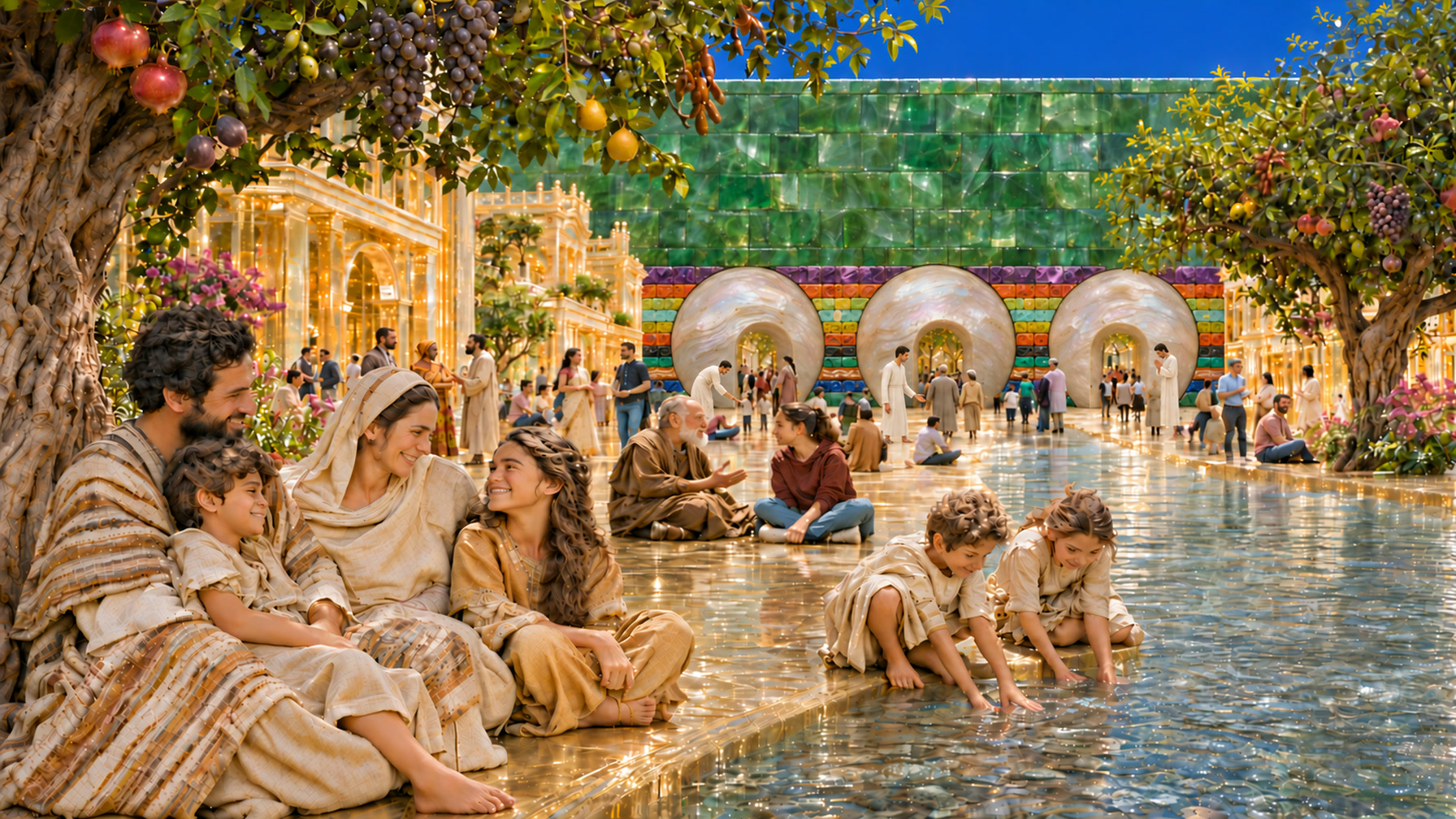
'He will wipe away every tear from their eyes, and death shall be no more, neither shall there be mourning, nor crying, nor pain anymore, for the former things have passed away.'
In the new Jerusalem, John sees the river of the water of life flow through the middle of the city's street from the throne of God and of the Lamb, as he calls Jesus. On either side of the river grows the tree of life, whose leaves are 'for the healing of the nations.'
With that healing, we come back to the question at the start of this article. Every ruler before Jesus in this story fails at the job that God gives people in the garden. Some of them, such as the kings in Daniel's dream, even devour the people whom they should look after. Jesus, however, does that job well, because he rules by serving people, even to the point of giving his life for them. That is why he is the one man who can heal every kind of pain that people carry.
Can you spot the pattern?
With the questions below, you can check how well you tell a ruler who devours people from one who serves them.
Where you stand in this story
You may have power over other people, as a parent, as a manager, or as someone whom another person depends on. You may also live under someone else's power. As you think about where you stand in this story, you can ask yourself these questions:
- Which leader do you hope will put things right for you, and what will you do if that leader lets you down?
- Where do you have power over someone else, and do you use it to serve that person or to take from them?
- What do you need to find out about Jesus before you can decide whether to trust him as your king?
If you want to read more, Mark 10:35-45 is a good place to begin, because in it James and John ask Jesus for power, while he calls them to serve. In my article on seeking God with all your heart, I show how you can start to look for him from where you are.